
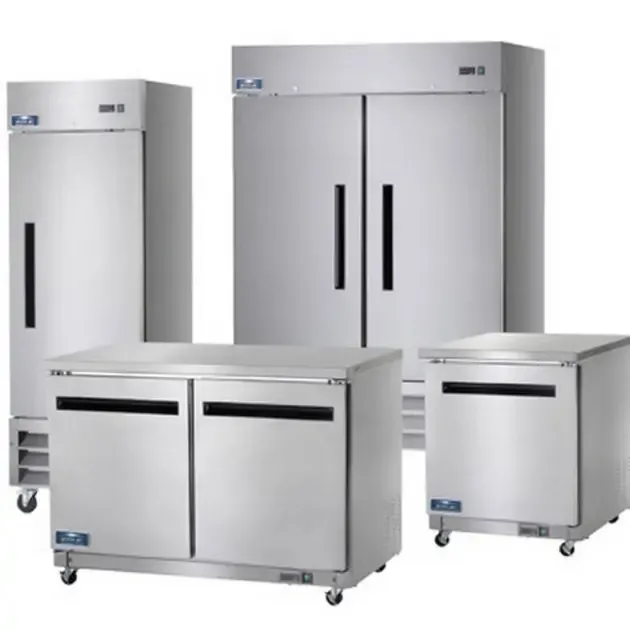

Energy-efficient commercial refrigeration has become a critical focus for businesses aiming to reduce operational costs while maintaining high performance. Refrigeration systems are essential in many industries, including food service, retail, and pharmaceuticals, where consistent temperature control is vital. However, these systems often consume significant amounts of energy, making them one of the largest contributors to utility expenses. By adopting energy-efficient technologies and strategies, companies can achieve substantial savings without compromising the quality or reliability of their refrigeration.
One key approach to improving energy efficiency is selecting equipment designed with advanced insulation materials and optimized compressors. Modern commercial refrigerators use better thermal barriers that minimize heat exchange between the interior and exterior environments. This reduces the workload on compressors that maintain low temperatures inside units. Additionally, variable speed compressors adjust their operation based on cooling demand rather than running at full power continuously. This modulation leads to reduced electricity consumption while preserving consistent temperature levels.
Another important factor involves upgrading lighting within refrigerated displays or storage areas. Traditional incandescent bulbs generate excess heat that forces cooling systems to work harder; replacing these with LED lights significantly lowers heat output and energy use simultaneously. LEDs also have longer lifespans which decrease maintenance requirements over time.
Proper maintenance practices contribute substantially to sustaining efficient refrigeration performance as well. Regular cleaning of condenser coils prevents dust buildup that impedes airflow and reduces cooling capacity. Ensuring door seals remain intact avoids unnecessary cold air leakage which otherwise increases compressor activity unnecessarily.
Incorporating smart controls into refrigeration management further enhances efficiency by enabling precise monitoring and automated adjustments based on real-time conditions such as ambient temperature fluctuations or usage patterns throughout the day. These intelligent systems optimize defrost cycles only when necessary instead of following fixed schedules regardless of actual frost accumulation.
Businesses can also explore natural refrigerants like hydrocarbons or carbon dioxide instead of traditional hydrofluorocarbons (HFCs). Natural refrigerants tend to have lower global warming potential while offering excellent thermodynamic properties favorable for efficient operation.
Investing in energy-efficient Commercial Refrigeration not only reduces utility bills but also supports environmental sustainability goals by lowering greenhouse gas emissions associated with electricity generation from fossil fuels. Over time, savings achieved through reduced energy consumption often offset initial upgrade costs making it a financially sound decision.
Ultimately, cutting costs without cutting performance requires a combination of modern technology choices, diligent maintenance routines, smart operational controls, and environmentally conscious refrigerant selection-all contributing toward more sustainable business practices in sectors reliant on commercial refrigeration solutions.


