
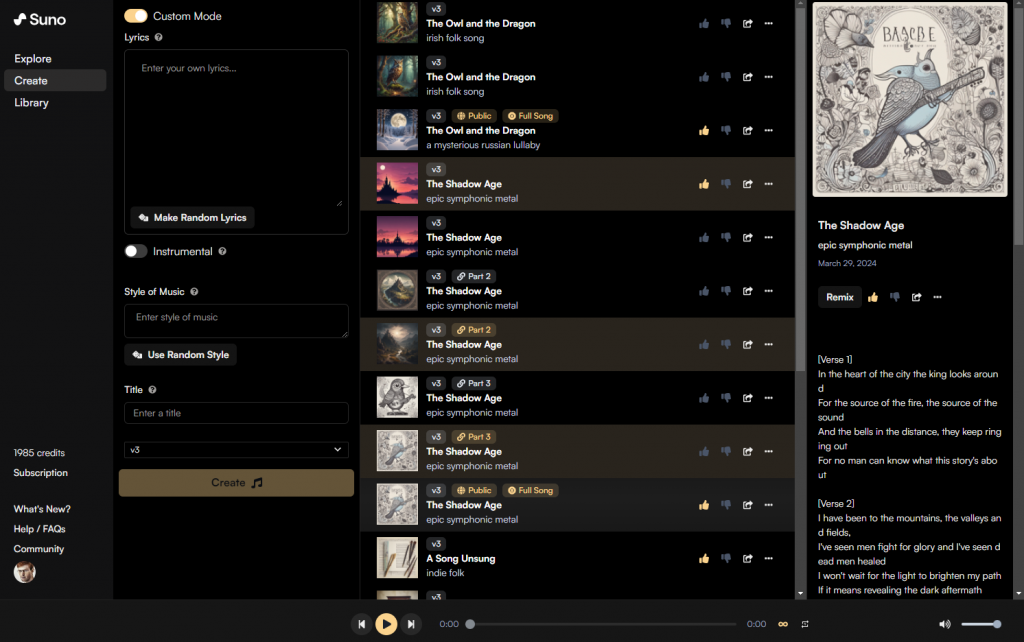

Creating music has traditionally required a combination of talent, training, and access to instruments or production software. However, with advancements in artificial intelligence, making music has become more accessible than ever before. AI song generators allow users to compose melodies, harmonies, and even lyrics with minimal effort. If you are interested in exploring this innovative tool but don’t know where to start, here is a step-by-step guide to making music using an AI song generator.
First, choose the right AI song generator for your needs. There are numerous platforms available online that offer different features such as genre selection, lyric creation, instrumental arrangement, and vocal synthesis. Popular options include OpenAI’s Jukebox, Amper Music, AIVA (Artificial Intelligence Virtual Artist), and Soundraw. Research each platform’s capabilities and pricing models before committing.
Once you have selected a platform, sign up or log in if necessary. Most services require creating an account to save your projects and access premium features. After logging in successfully, familiarize yourself with the interface by exploring menus and tutorials provided by the platform.
Next comes the creative input phase where you define parameters for your song. This usually involves selecting a genre like pop, rock, jazz or classical; choosing mood descriptors such as happy or melancholic; specifying tempo (speed); and sometimes providing seed melodies or chord progressions if available. The more detailed your inputs are at this stage,the better tailored the output will be.
After setting up these preferences,you can initiate the generation process by clicking on buttons labeled “Create,” “Generate,”or similar terms depending on your chosen service.The AI then processes your inputs through complex algorithms trained on vast datasets of musical compositions.It generates audio files that can range from simple loops to fully arranged songs complete with vocals.
Once generation is complete,you should listen carefully to evaluate whether it meets your expectations.If satisfied,you may download the track directly from the platform.In many cases,you can also edit elements like instrumentation,mix levels,and effects within built-in editors provided by some advanced tools.This allows further customization without needing external software.
If you want lyrics incorporated into your composition but they were not included initially,some platforms offer separate lyric generators powered by language models.You can create verses and choruses based on themes or keywords relevant to your project.Then,synchronize these lyrics with generated melodies either manually or automatically depending on functionality offered.
Finally,it’s important to respect copyright rules associated with AI-generated content.Some services grant full ownership rights while others impose restrictions on commercial use.Be sure to read terms carefully especially if planning distribution beyond personal enjoyment.
In conclusion,making music with an AI song generator is an exciting blend of creativity supported by technology.With just a few clicks,you can produce unique pieces regardless of prior musical experience.By following these steps systematically,your journey into digital songwriting becomes both fun and rewarding.