
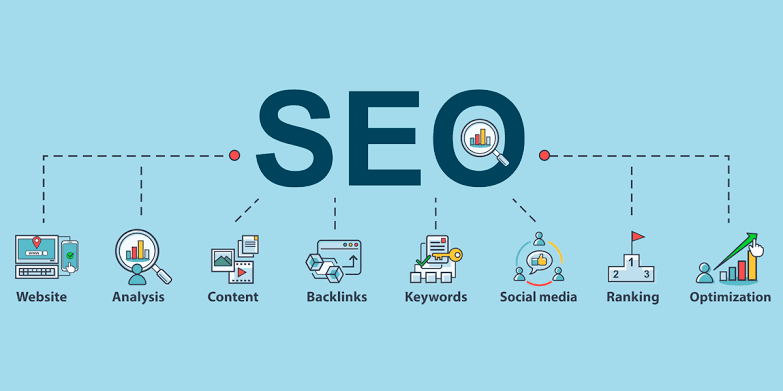

The search bar is no longer just an indexing engine that points users to a list of blue links; it has transformed into an answer engine that synthesizes, evaluates, and recommends. Between Google’s AI Overviews, OpenAI’s search capabilities, Perplexity, and conversational assistants embedded across operating systems, buyers increasingly make purchasing and vendor decisions without ever clicking through to a traditional search results page.
For premium brands: luxury goods, high-end “to-the-trade” manufacturers, specialized B2B service firms, and bespoke hospitality operators, this shift represents both an existential threat and a massive competitive advantage.
When an algorithm summarizes an entire category into a two-paragraph response, commoditization is the default risk. If an artificial intelligence engine reduces a handcrafted, heritage architectural hardware brand to “door handles” or fails to understand why an enterprise software platform commands a 40% price premium over open-source alternatives, the brand is erased from the buyer’s initial consideration set.
Winning in generative search requires abandoning basic keyword density tactics in favour of Generative Engine Optimization (GEO): training large language models (LLMs) to recognize, trust, and recommend your brand as the definitive authority in your space.
How LLMs Form Opinions About Your Brand
Traditional search engines rank URLs based on keyword signals, page authority, and backlink graphs. Generative models operate differently. When an LLM answers a query like “What are the most reliable commercial architectural lighting manufacturers for luxury hotels?”, it does not simply pull the top ten ranking pages and scrape them.
Instead, LLMs rely on a two-step process: probabilistic language modelling (what the model learned during pre-training) and Retrieval-Augmented Generation (RAG) (live, real-time retrieval of authoritative web sources to substantiate its answer).
To be cited and recommended in this environment, a brand must achieve three milestones:
- Entity Clarity: The model must understand exactly what your brand is, what category it belongs to, and what distinct attributes separate it from cheaper alternatives.
- Third-Party Consensus: LLMs look for corroboration. If only your own website claims your materials are aerospace-grade or sustainably harvested, an LLM treats it as marketing hyperbole. If trusted third-party trade journals, industry databases, and editorial reviews confirm it, the model treats it as verified fact.
- High Information Gain: Generative models aggressively filter out derivative, repetitive web copy. They extract and cite content that offers unique data, proprietary frameworks, original research, or specific technical documentation that exists nowhere else.
- Anchor Your Brand as a Definite Knowledge Graph Entity
LLMs understand the world through entitiesdistinct people, places, organizations, and concepts interconnected by semantic relationships. If your digital presence lacks structured entity signals, the model may confuse your brand with a competitor, misstate your product lines, or overlook you entirely.
- Implement Advanced Organization and Product Schema: Beyond standard schema markup, utilize detailed JSON-LD properties such as (linking to verified Wikidata, Wikipedia, Crunchbase, LinkedIn, and official social profiles), brand and hasMerchantReturnPolicy.
- Standardize Brand Citations Across the Web: Ensure your corporate name, founding date, headquarters, executive leadership, and primary product lines are cited with identical factual accuracy across every trade registry, industry directory, and press release. Ambiguity breeds model hesitation; uniformity breeds certainty.
- Claim and Optimize Wikidata Entities: Wikidata serves as a foundational structured knowledge repository for virtually every major frontier model. Establishing and verifying an accurate Wikidata record for your enterprise anchors your business directly into global knowledge graphs.
- Shift Focus from Traditional Backlinks to “Digital Consensus”
In traditional SEO, acquiring links was primarily a numbers and domain rating game. In generative search, models prioritize semantic sentiment and editorial consensus.
When an LLM evaluates a brand for an AI Overview recommendation, it evaluates what independent authorities say about you across diverse web ecosystems:
- High-Authority Digital PR and Trade Publications: Mentions in premier industry outlets (e.g., Architectural Digest, The Wall Street Journal, or niche B2B journals) carry immense semantic weight. When these publications consistently describe your brand with adjectives like “industry standard,” “bespoke,” or “precision-engineered,” the language model absorbs those associations into its semantic cluster.
- Community and Forum Discussions: Modern retrieval systems frequently crawl forums, Reddit, specialized Substack’s, and LinkedIn discussions to measure authentic human sentiment. Unmoderated, peer-to-peer discussions evaluating real-world product reliability directly inform whether an AI tool recommends your brand or warns the user about customer support issues.
- Unlinked Brand Mentions: Unlike traditional search crawlers that demand a live hyperlink to pass authority, LLMs parse plain text. A positive editorial reference in a trusted industry report elevates your brand entity even if the publication omitted a direct link to your site.
- Produce Proprietary Content with High “Information Gain”
If an article on your website merely summarizes what five competitor blogs have already said, an LLM has zero incentive to cite your brand. In fact, retrieval algorithms are explicitly designed to compress and de-duplicate redundant information.
To become the primary cited source in AI Overviews:
- Publish Original Data and Industry Benchmarks: Conduct proprietary market surveys, compile material durability studies, or publish annual pricing indices. When your business is the primary source of a statistic or data point, LLMs must cite your domain when responding to related industry inquiries.
- Detail Real-World Case Studies with Quantifiable Outcomes: Replace vague marketing claims with transparent breakdowns of engineering challenges, implementation timelines, and exact operational returns. Generative models gravitate toward concrete case histories when answering complex, multi-layered B2B search prompts.
- Document Patented Methodologies and Proprietary Standards: If your manufacturing process utilizes a specialized alloy, a unique curing process, or a proprietary project management framework, give that methodology a branded name and publish comprehensive documentation explaining how it works.
- Structure Content for Direct Machine Extractability
While creative, long-form storytelling builds emotional resonance with human buyers, content must also be architected so that retrieval engines can parse and extract answers instantaneously.
- Declarative Answers First: Open technical guides and resource pages with direct, unambiguous definitions before expanding into nuanced analysis. If a buyer asks an AI engine, “What are the fire resistance ratings for commercial bronze cladding?”, the model will retrieve the page that provides the specific rating in the very first sentence of the section.
- Clear Semantic Hierarchy: Utilize structured H2 and H3 tags phrased as natural-language questions and explicit topical subheads. Keep supporting points grouped in logically nested bullet points and clean descriptive blocks.
- B2B Specification and Comparison Modules: Premium buyers frequently prompt AI engines to compare premium solutions against mass-market alternatives. Build objective, side-by-side technical evaluation guides on your site that explicitly define where your solution excels, who it is designed for, and when a lower-cost alternative might suffice. By providing an honest, balanced breakdown, your page becomes the trusted reference point the AI uses to structure its own comparison.
Preserving Brand Equity in the Age of Synthesis
The rise of generative AI search does not mean the end of premium branding; it raises the barrier to entry. In a search landscape where generic content is synthesized and discarded in milliseconds, genuine authority cannot be faked with outsourced keyword stuffing.
Premium brands that actively manage their digital entity, cultivate authoritative third-party consensus, and publish truly irreplaceable intellectual property will not be erased by generative search. They will become the definitive answers that artificial intelligence serves to the world’s most discerning buyers.